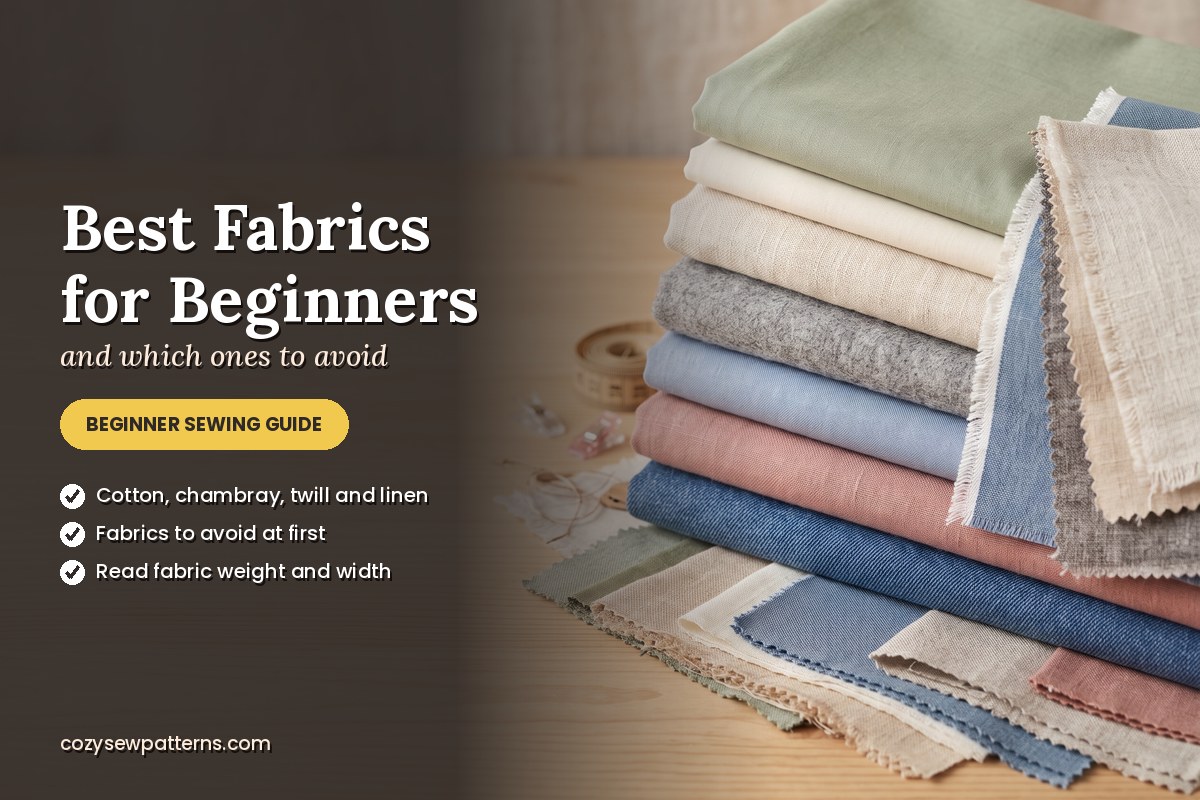
Choosing the right fabric is half the success of your first sewing project. The same pattern can be a joy to sew in a crisp cotton and a nightmare in a slippery satin. If you are just starting out, a few smart fabric choices will make every step easier, from cutting to pressing.
What makes a fabric easy to sew?
- Woven, not stretchy: it keeps its shape while you cut, pin and sew.
- Medium weight: not so thin it slides, not so thick it fights the machine.
- Matte, with a little grip: layers stay together instead of slipping.
- Holds a press: creases and seams stay flat when you iron them.
- Solid colour or small all-over print: no stripes, plaids or one-way prints to match.
The best fabrics for beginners
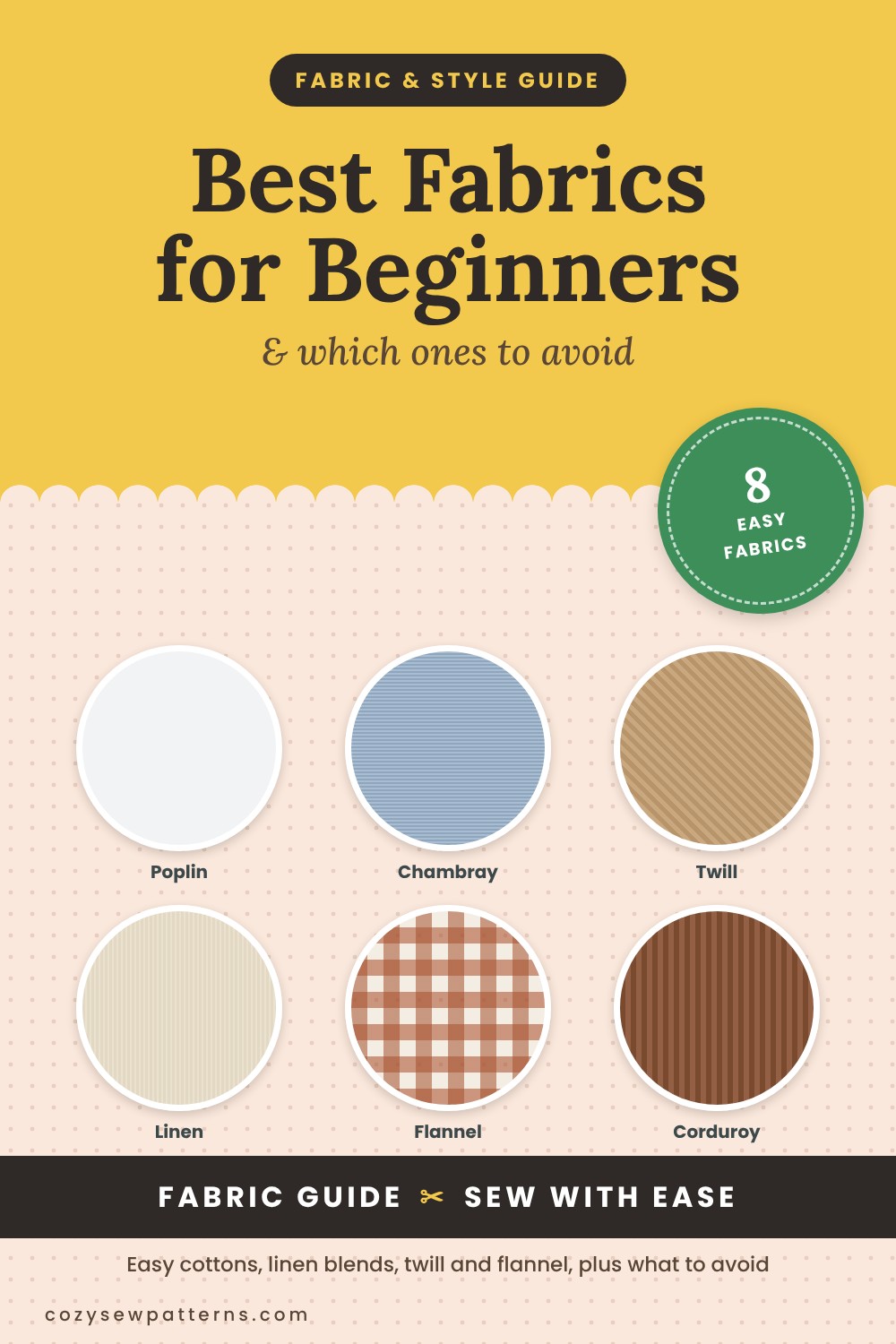
| Fabric | Why it is easy | Great for | Try it with |
|---|---|---|---|
| Cotton poplin | Crisp, stable, presses beautifully | Shirts, blouses, dresses | Bishop Sleeve Blouse |
| Chambray | Soft but stable, hides small wobbles | Shirts, dresses, pinafores | Pinafore Dress |
| Cotton twill | Sturdy, does not slip, easy to topstitch | Trousers, skirts, jackets | Barrel Leg Pants |
| Linen-cotton blend | Less shifty than pure linen, presses crisply | Trousers, dresses, tops | Barrel Trousers |
| Cotton flannel | Soft, grippy and forgiving | Pyjamas, nightgowns, shirts | Victorian Nightgown |
| Light denim (6–9 oz) | Stable and durable | Trousers, skirts, pinafores | Barrel Leg Pants |
| Needlecord / corduroy | Stable, grippy; just cut with the nap | Pinafores, skirts, trousers | Corduroy guide |
| Wool flannel / melton | Thick but stable, steams into shape | Coats, vests, jackets | Mandarin Collar Coat |
Easy knits for your next step
Once you are comfortable with wovens, stable knits are the next step. Look for ponte, French terry and sweatshirt fleece: they are thick, do not curl at the edges and are easy to sew on a regular machine. Our guide on how to sew knit fabric on a regular sewing machine explains everything, and the free Zip-Up Bomber Sweatshirt is a great first knit project.
Fabrics to avoid at first
| Fabric | Why it is tricky |
|---|---|
| Satin, silk, chiffon, georgette | Slippery and shifty; hard to cut straight; marks easily |
| Velvet and stretch velvet | Pile shifts and crushes; needs special pressing |
| Sheers (voile, organza) | Every seam shows through; needs special seam finishes |
| Thin, very stretchy jersey | Curls at the edges and stretches out of shape |
| Sequins and heavy embellishment | Must be removed from seams by hand |
| Thick wide-wale cord, heavy canvas | Very bulky at collars, plackets and buttonholes |
| Stripes, plaids, big one-way prints | Need pattern matching and extra fabric |
How to read fabric weight and width
- Weight is shown in grams per square metre (gsm) or ounces per square yard (oz). As a rough guide: lightweight under 150 gsm (blouses, linings), medium 150–250 gsm (shirts, dresses, trousers), heavy over 250 gsm (jackets, coats, workwear).
- Width is usually 110–115 cm (45″) or 140–150 cm (55–60″). Pattern fabric charts give amounts for both, so check which width you are buying.
- Fibre content tells you how it will behave: cotton and linen press crisply and may shrink; polyester resists wrinkles but does not like a hot iron; viscose drapes beautifully but is softer to handle.
Buying and preparing your fabric
- Check the pattern’s suggested fabrics and fabric chart before buying.
- Buy 10–20 cm (4–8″) extra for shrinkage and small mistakes.
- Buying online? Order a swatch first if you are not sure about the weight and drape.
- Prewash the fabric the way you will wash the finished garment, and press it before cutting.
- Find the grain: the selvage runs along the length of the fabric, and the grainline arrows on your pattern sit parallel to it.
Pick an easy pattern for your fabric
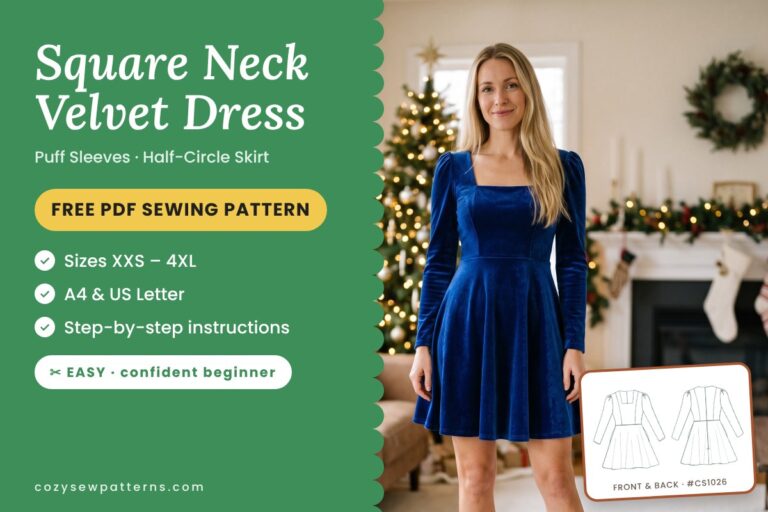
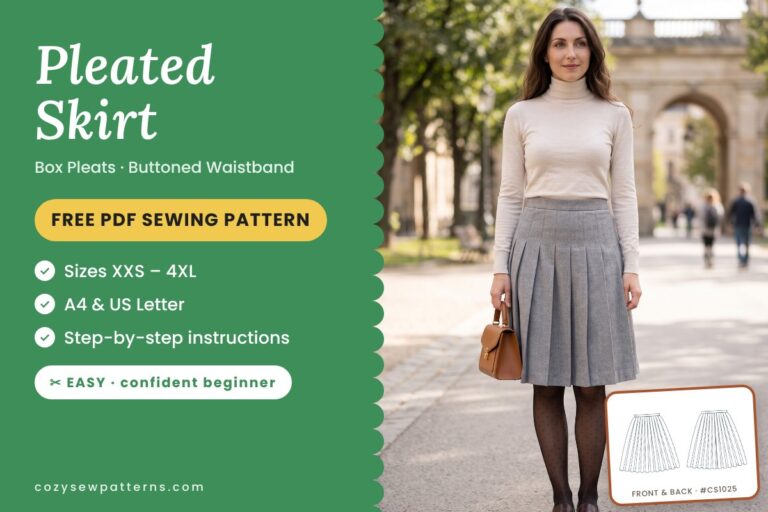
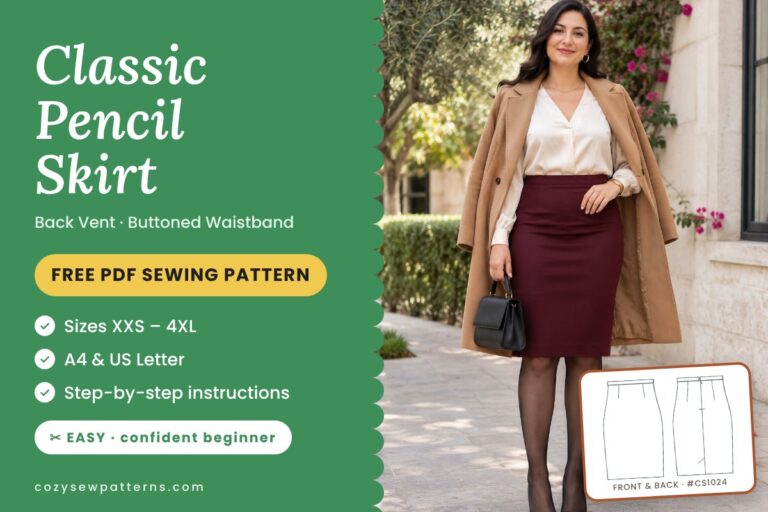
All our patterns list suggested fabrics, a fabric chart for each size and a size chart, free in A4 and US Letter, sizes XXS–4XL.
Frequently asked questions
What is the easiest fabric to sew for beginners?
Medium-weight woven cottons such as poplin, chambray and twill. They are stable, do not slip, press well and are easy to find in solid colours.
Is linen good for beginners?
Linen-cotton blends are easy to sew. Pure lightweight linen can shift and fray a little more, but it is still a good choice once you have sewn a first project.
Which fabrics should beginners avoid?
Slippery fabrics like satin and chiffon, velvet, sheers, very thin stretchy jersey, sequins, and fabrics with stripes or plaids that need matching.
Do I need to prewash fabric before sewing?
Yes, for anything you will wash. Cotton, linen and corduroy can shrink 3–5% in the first wash, so prewash and dry the fabric the way you will care for the garment.
Happy sewing!