Walk into a sewing shop and you will find walls of gadgets. The truth is that you need surprisingly little to start sewing clothes at home, and a few good basic tools will make far more difference than a drawer full of extras.
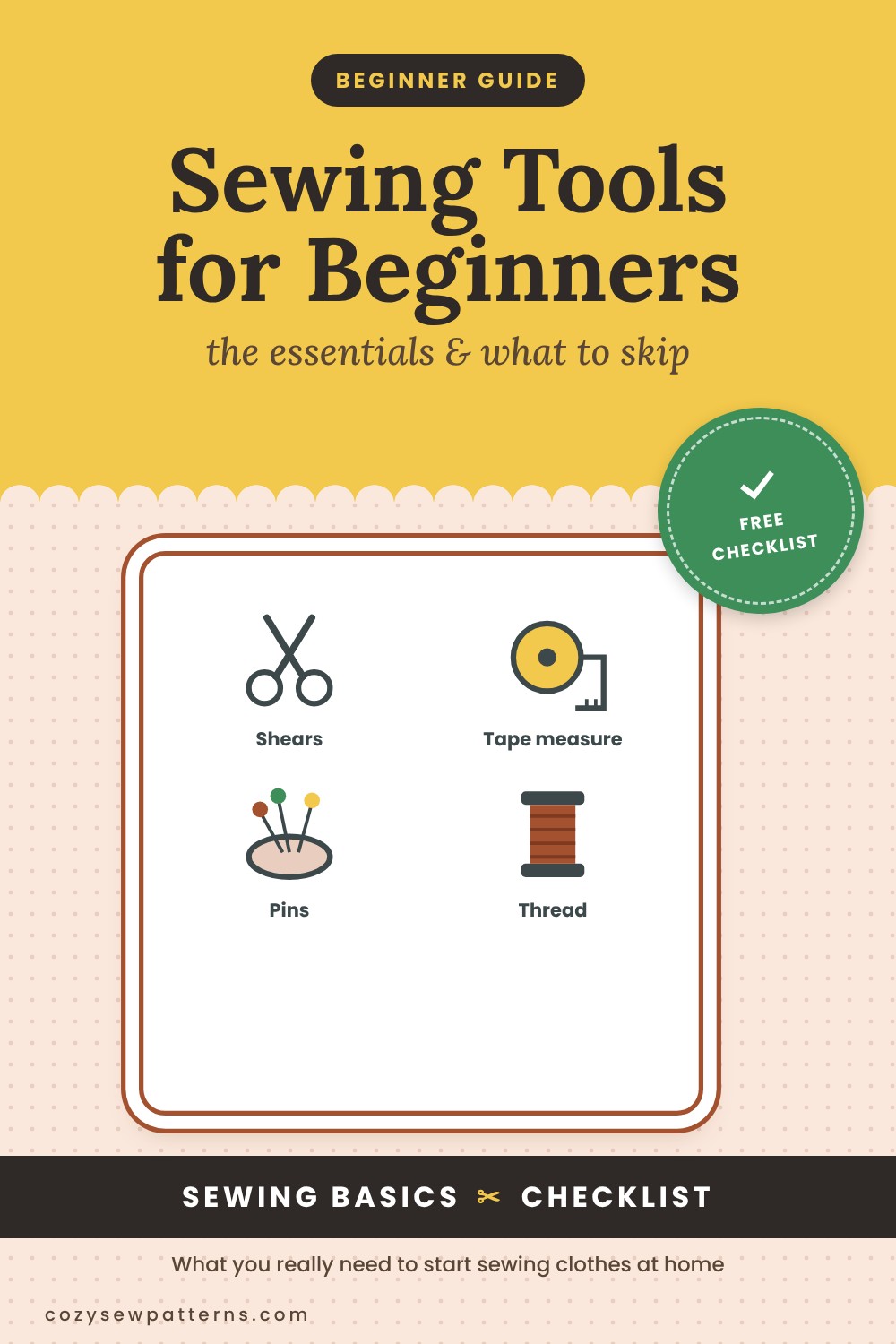
Here is our list of sewing tools for beginners: what you really need, why you need it, and what you can happily skip until you have a few garments behind you.
1. A basic sewing machine
You do not need an expensive or computerised machine. For sewing clothes, look for these features:
- A good straight stitch with adjustable length.
- A zigzag stitch with adjustable width, for finishing edges and sewing knits.
- A one-step buttonhole. It makes buttonholes far easier (see our buttonhole guide).
- A free arm for sleeves and trouser hems.
- A sturdy build that can sew through four layers of denim without stalling.
2. Cutting tools
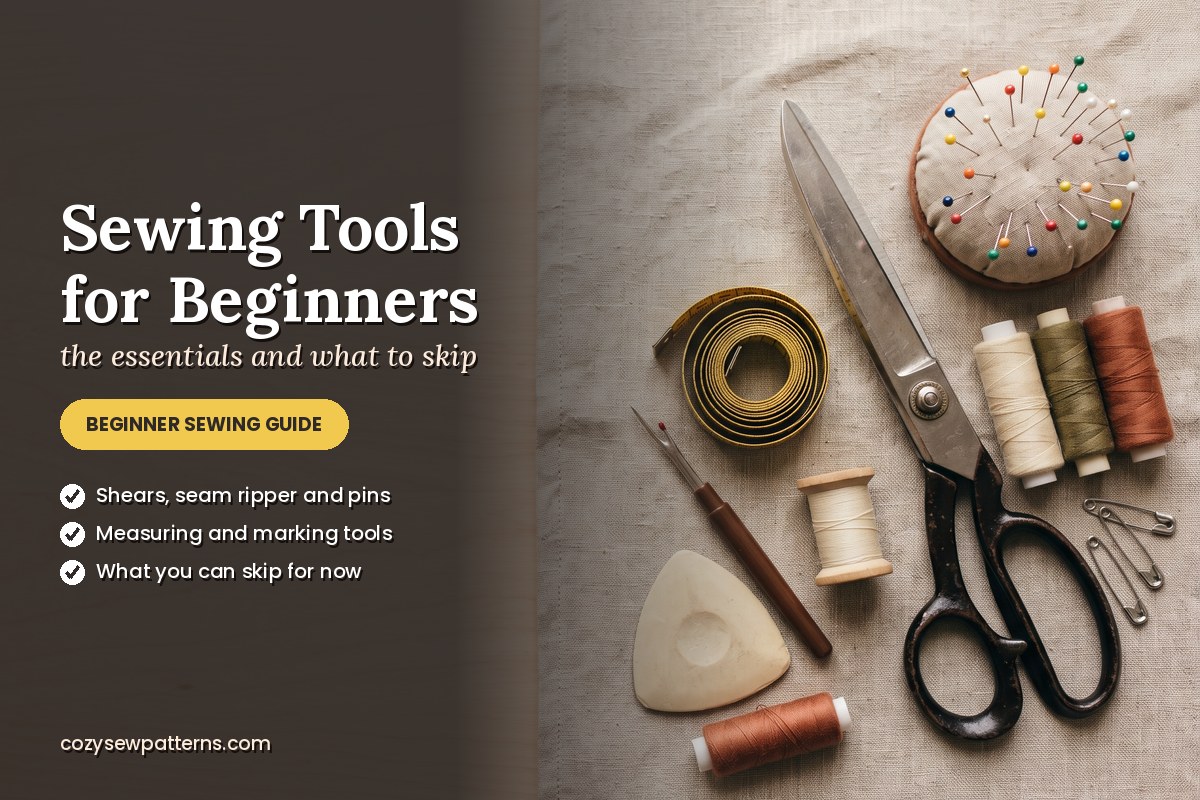
- Fabric shears (20–25 cm / 8–10″). Your most important tool. Use them only on fabric: paper blunts them quickly. Tie a ribbon on the handle so nobody at home borrows them.
- Paper scissors for cutting out your pattern pieces.
- Small thread snips to trim threads at the machine.
- A seam ripper. Every sewist unpicks. A sharp one makes it quick and safe.
3. Measuring and marking tools
- A soft tape measure in cm and inches, to take your body measurements and check pattern pieces. Our guide shows how to take your measurements.
- A clear ruler (a 15 × 60 cm / 6 × 24″ quilting ruler is perfect) for straight lines, hems and adding length.
- A small sewing gauge for measuring hems and buttonhole spacing.
- Tailor’s chalk or a washable fabric marker to transfer notches, dots and darts. Test it on a scrap first.
4. Pins, clips and hand needles
- Glass-head pins: easy to see and they will not melt under the iron.
- Sewing clips for thick fabrics, leather and anything pins would mark.
- A pincushion or a magnetic pin dish.
- Hand-sewing needles in mixed sizes, for buttons, hems and finishing.
5. Pressing tools
Pressing is half of sewing. A seam pressed as you go looks neat; the same seam left unpressed looks home-made.
- A steam iron with adjustable heat.
- An ironing board, or a folded towel on a table to start.
- A press cloth: a piece of plain cotton or organza to protect delicate fabrics and when fusing interfacing.
- Nice to have later: a tailor’s ham for pressing curved seams like darts and princess seams.
6. Machine needles and thread
| Needle | Use it for |
|---|---|
| Universal 70/10–80/12 | Light woven fabrics: lawn, poplin, viscose |
| Universal 90/14 | Medium woven fabrics: twill, linen, corduroy |
| Jeans 100/16 | Denim, canvas, thick wool |
| Ballpoint / jersey 75/11–80/12 | Knit fabrics: jersey, rib, French terry |
| Stretch 75/11 | Knits with a lot of elastane |
For thread, a good all-purpose polyester thread works for almost everything. Cheap thread breaks, frays and leaves fluff in your machine, so it is worth buying a known brand.
7. For PDF patterns
- A home printer that prints at 100% (“Actual size”).
- Clear tape or a glue stick to assemble the pages.
- Paper scissors or a craft knife.
New to PDFs? Read How to Print and Assemble a PDF Sewing Pattern.
What you can skip for now
- A serger (overlocker). Lovely to have, but a zigzag stitch finishes edges perfectly well while you learn.
- A rotary cutter and mat. Fast and accurate, but good shears are enough to start.
- A dress form. Useful for fitting later on, not needed for your first projects.
- Specialist presser feet. Your machine’s standard foot, zipper foot and buttonhole foot cover almost everything.
Beginner sewing checklist
| Tool | Must have | Later |
|---|---|---|
| Sewing machine with zigzag + buttonhole | ✓ | |
| Fabric shears + paper scissors + snips | ✓ | |
| Seam ripper | ✓ | |
| Tape measure + clear ruler | ✓ | |
| Chalk or washable marker | ✓ | |
| Pins or clips + pincushion | ✓ | |
| Steam iron + press cloth | ✓ | |
| Universal, jeans and jersey needles | ✓ | |
| All-purpose polyester thread | ✓ | |
| Tailor’s ham | ✓ | |
| Rotary cutter + mat | ✓ | |
| Serger | ✓ |
Your tools are ready: what to sew first?
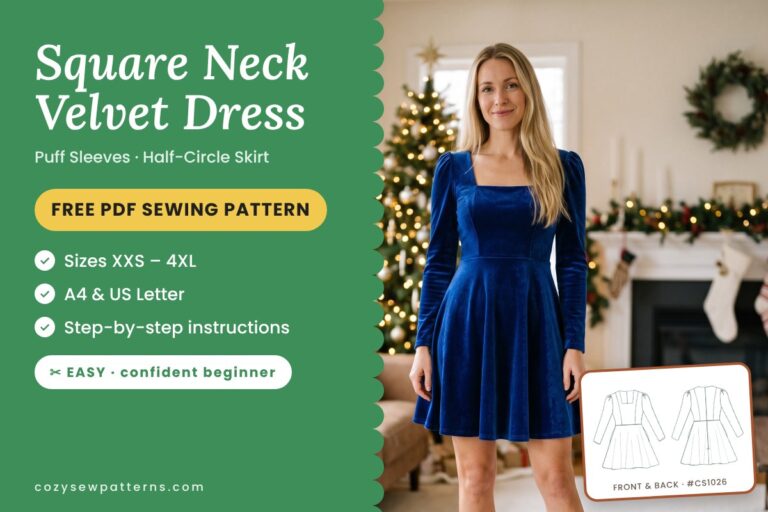
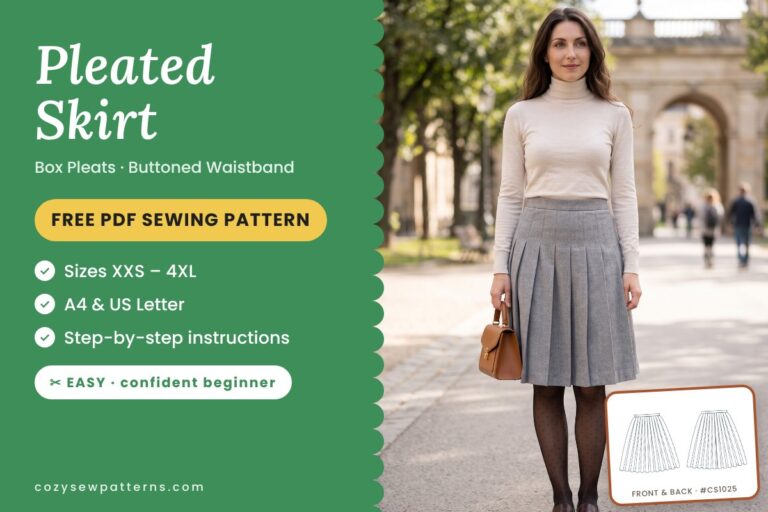
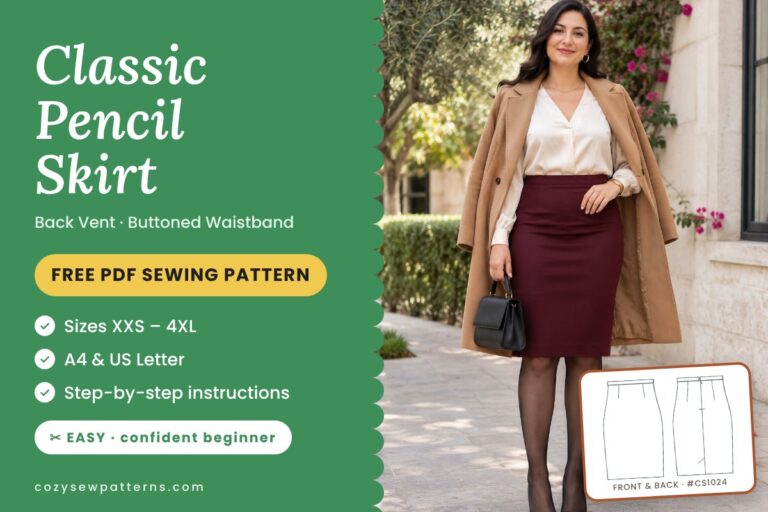
Start with an Easy pattern. All our patterns are free in A4 and US Letter, in sizes XXS–4XL, with a size chart and fabric chart.
Frequently asked questions
What sewing tools do I need as a beginner?
A basic sewing machine with straight, zigzag and buttonhole stitches, fabric shears, a seam ripper, pins, a tape measure, a ruler, chalk, an iron, the right machine needles and all-purpose polyester thread.
Do I need a serger to sew clothes?
No. A zigzag stitch on a regular sewing machine finishes seam edges well and sews knit fabrics too. A serger is a nice upgrade later.
How often should I change my sewing machine needle?
About every 8 hours of sewing, or straight away if it skips stitches, makes a popping sound or snags the fabric.
Can I use paper scissors on fabric?
Keep separate scissors for fabric and paper. Cutting paper dulls blades quickly, and dull shears chew fabric instead of cutting it cleanly.
Happy sewing!